

New Geographies
Years: 2008-Ongoing
Frequency: Yearly
Number of Issues: 13
Format: Published Journal
Click on the cover to learn more about the publication on the Harvard Graduate School of Design’s Website.
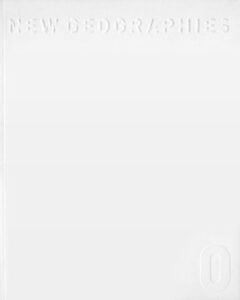
March 2009

September 2009
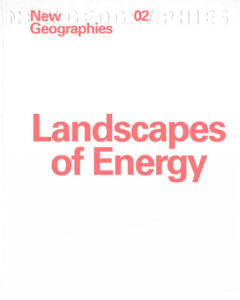
February 2010
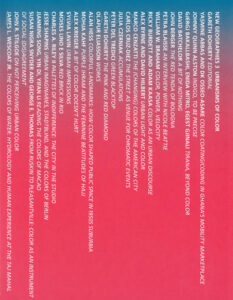
February 2011
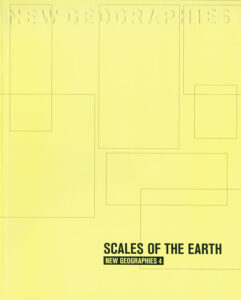
September 2011
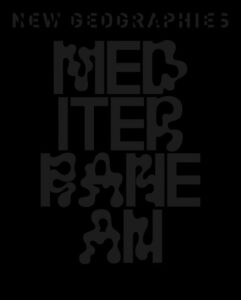
May 2013
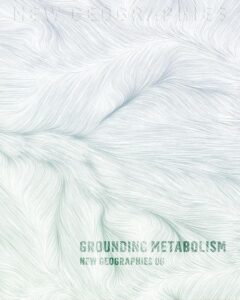
November 2014

October 2015
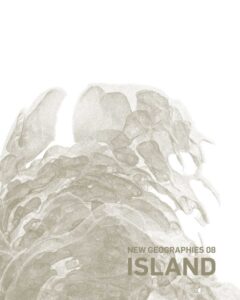
November 2016
NEW GEOGRAPHIES was founded —and continues to be produced — by GSD doctoral candidates, with support from the Aga Khan Program at the GSD (directed by Hashim Sarkis at its founding), along with additional grant funding secured by the students themselves. The journal must also be situated within the broader context of the arrival of Mohsen Mostafavi’s deanship. In his effort to expand the scope and impact of design, Mostafavi envisioned a series of platforms and labs to foster broader engagement and collaboration among GSD students and faculty. Each platform was granted both opportunity and support to take shape according to the interests and research needs of its participants. The opening issue of New Geographies explains that the journal emerged from the realization that, in an era of increasing globalization, there was “the need to create a platform for repositioning the agency of design within new scales of context.” Backed by significant financial support and a carefully framed intellectual project, the editors interrogated the emergence of the geographic as a paradigm that shifts and expands the agency of design. Following the model of The Harvard Architecture Review, each issue of the journal is organized around a theme and produced by a rotating group of student editors.
Issue zero, Design, Agency, Territory introduces the idea of shifting scales, the changing role of design, and the importance of geography in shaping our world. After Zero looks at the “zero point” as a starting place for imagining cities built from scratch and the new spatial conditions they bring. Landscapes of Energy explores how energy and space connect across different technologies and scales, highlighting design’s environmental impact. Urbanisms of Color uncovers the overlooked potential of color in urban design, drawing from multiple disciplines. Scales of the Earth focuses on how satellite imagery and aerial views change the way we understand Earth and territory. The Mediterranean questions the region as a cultural and political construct, revealing the implications of such regional formations. Grounding Metabolism examines urban metabolism, showing how planetary processes shape spatial strategies. Geographies of Information investigates how data, networks, and digital infrastructures influence the spaces we inhabit. Island rethinks boundaries through the concept of “islandness”, using an atlas-like approach to reassess its role in design. Posthuman considers how urban landscapes of the 21st century shape design in a world that moves beyond human-centered perspectives. Fallow reflects on dormant, wasted, or undervalued spaces, exploring their potential for cultural, ecological, and social renewal. Extraterrestrial examines humanity’s evolving relationship with outer space, both historically and today. Finally, Commons uses the idea of shared resources as a political and spatial framework to question and reimagine different forms of collective ownership and use.

January 2018
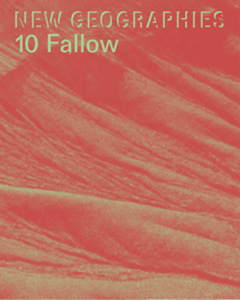
May 2019
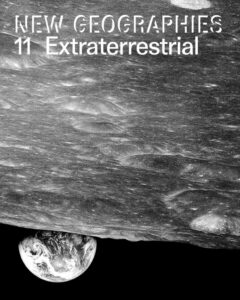
February 2020
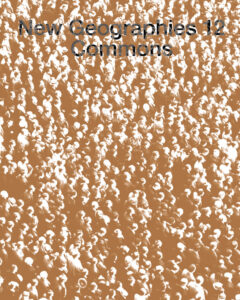
October 2021

GSD STUDENT PUBLICATIONS
Frances Loeb Library
Curated by Ines Zalduendo, Special Collections Curator at the Frances Loeb Library, M.Arch ’95
Designed by Ashleigh Brady, Archival Collections Website Editor, M.Arch ’26
With collaboration from Priscilla Mariani, FLL Access Services Specialist
An Opinion on Architecture | Task: A Magazine for the Younger Generation in Architecture | Synthesis | Connection: Visual Arts at Harvard | for’m | The Harvard Architecture Review | re/alignment | APPENDX: Culture/Theory/Praxis | isthmus | Gamut | Trays: A Student Journal of the GSD | New Geographies | Platform | Harvard Real Estate Review | Open Letters | Very Vary Veri | MASKS, the Journal: Journal of the Dissimulation in Art | Process: Journal of the GSD Design Research Forum | OBL/QUE | WID Bibliography | Pairs | Translations